






























In the world of textile personalization, the same request can hide several technical solutions. A customer wants "a logo on a t-shirt" but for a marking professional, the real question is different: which textile transfer technique will deliver the right look, at the right price and with the right durability?
Today, there are several ways to apply a transfer on fabric. Some are ideal for short runs, others for industrial production, still others for enhancing brand image. Understanding these methods helps avoid costly mistakes and properly guide your customers.
Here is a complete overview of the main textile personalization techniques used by professionals.
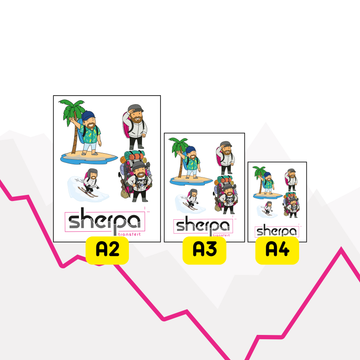
Textile personalization with DTF transfer : the versatile solution
For the past few years, DTF has established itself as the reference technique for the majority of workshops.
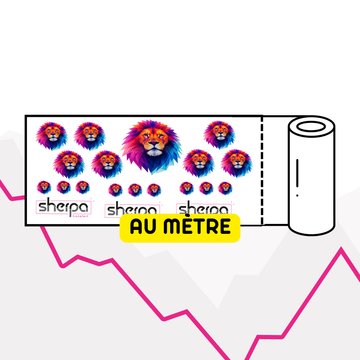
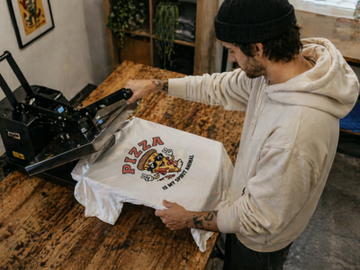
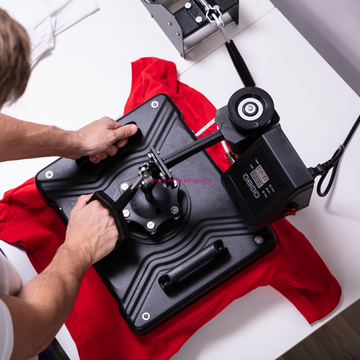
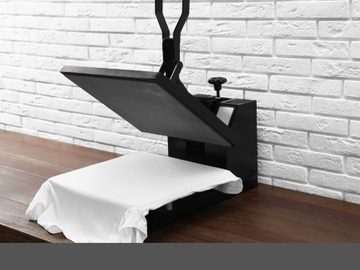
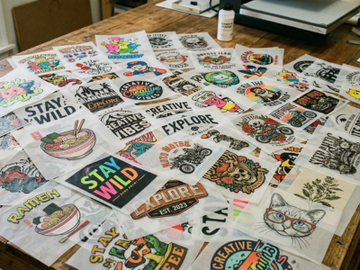
The principle is simple: the design is printed on a film, then heat pressed onto the textile.
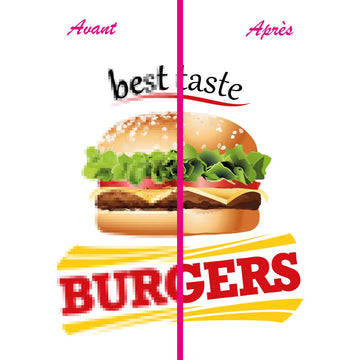
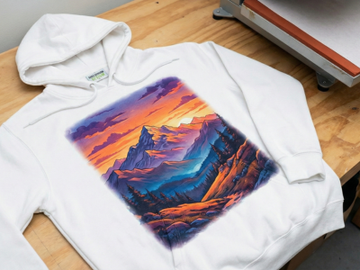
Unlike old transfer methods, DTF now allows you to obtain fine gradients, vibrant colors, readable small text and even print a photo on fabric without complex preparation.
It is this versatility that explains its massive adoption. Where certain techniques require a specific type of textile, DTF works on cotton, polyester, blends or technical garments. It is often the simplest answer for a customer requesting textile customization quickly and with a clean finish.
In practice, professionals use it for:
- clothing brands
- small series
- merchandising
- varied customer orders
DTF is today the most flexible textile customization technique: it reduces technical constraints while maintaining quality results.
In summary…
DTF Process
DTF (Direct To Film) consists of printing a design on a film, then transferring it onto fabric using a heat press. This results in a personalized garment, thanks to the versatile heat transfer, which is compatible with most materials (cotton, polyester, blends). It is today the most used method for a transfer for personalized t-shirt.
Advantages
- Compatible with almost all textiles
- Ideal for reproducing visuals rich in color and detail
- Excellent detail precision
- Ideal for small and medium runs
- Durable and resistant to washing
DTF is particularly appreciated for image transfer onto textiles and complex four-color logos.
Example of professional application
A clothing brand launching a new collection or a sports club with several different visuals to produce will generally choose DTF for its flexibility, speed and ability to handle multiple designs without major technical constraints.

The sublimation : the reference in technical textiles
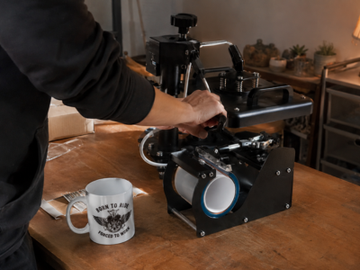
Sublimation works differently. Here, it is not a heat transfer applied to the fabric: the ink penetrates directly into the fiber thanks to heat.
This results in personalization without thickness. To the touch, nothing protrudes: the textile remains perfectly breathable.
This is what makes this technique essential in sports and technical clothing. A sublimated jersey can be washed hundreds of times without notable visual alteration, because the design is an integral part of the material.
On the other hand, this technique imposes an important constraint: it only works on light-colored polyester. So we are not talking about a universal heat transfer for textiles, but a specialized solution.
Sublimation is preferred for:
- sports clubs
- sporting events
- breathable textiles
- technical clothing
It offers exceptional durability, but requires choosing the right support from the start.
In summary…
Sublimation process
Sublimation is based on a thermal reaction: the ink transforms into gas and penetrates directly into the polyester fiber. Unlike other methods, it is not a transfer applied to fabric but a true coloring of the textile. This technique of transfer onto fabric without thickness to the touch is ideal for technical textiles.
Sublimation advantages
- No perceptible relief
- Exceptional durability over time
- No cracking
- Perfect for sports and technical clothing
- Sublimation is the reference for durable marking on polyester textile.
Example of professional application
Sports jerseys, breathable clothing or technical event wear predominantly use sublimation to guarantee comfort, lightness and durability.

The screen print transfer : industrial durability
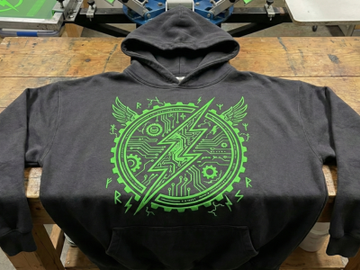
Screen printing is one of the oldest textile transfer printing techniques. Its principle is based on the application of ink layer by layer through a screen directly onto the textile.
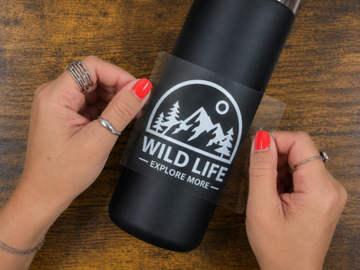
For a screen printing transfer, the ink layers are applied to a film, which can then be heat pressed onto the textile.
This process requires more preparation, but it offers remarkable durability.
It is the preferred technique for large runs: the higher the quantity, the lower the unit cost. It therefore remains essential for companies, festivals or associations needing hundreds of identical pieces.
Screen printing is often chosen for its durability: it is one of the markings that best withstands time, intensive washing and professional use.
It perfectly meets the needs of a durable and reproducible personalized textile transfer.
In summary…
Process
Screen printing transfer consists of applying ink layer by layer through a screen onto a film. The design is then heat pressed onto the textile. It is a historic image transfer technique in the textile field.
Advantages
- Maximum durability
- Opaque and intense colors
- Ideal for large runs
- Low unit cost in volume
- Personalized screen printing textile transfer is particularly suited to large-scale production.
Example of professional application
Companies equipping their employees, festivals or events producing several hundred identical garments use screen printing for its durability and cost-effectiveness.

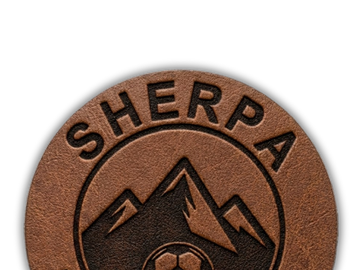
The Patch : Adding Value to Garments
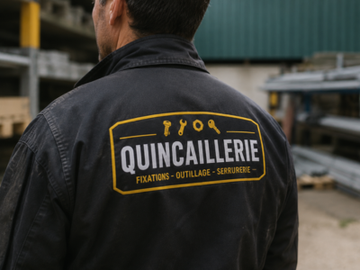
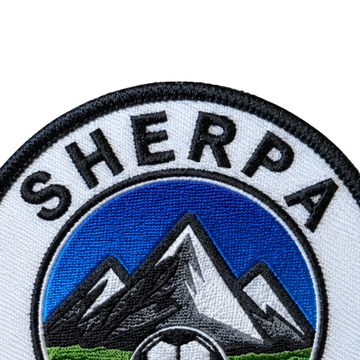
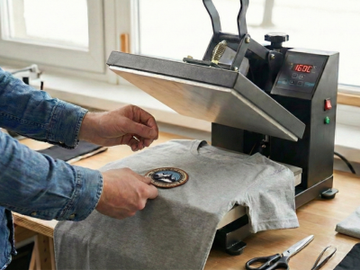
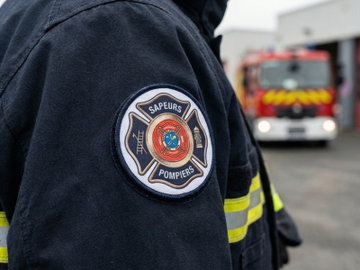
Finally, there is a different approach: not to print, but to add a textile element. The patch is not a classic transfer, it is a piece manufactured separately and then heat-sealed, velcroed or sewn.
This method transforms the marking into a design element. We are no longer just looking to identify a garment, but to give it an identity.
Patches are widely used in:
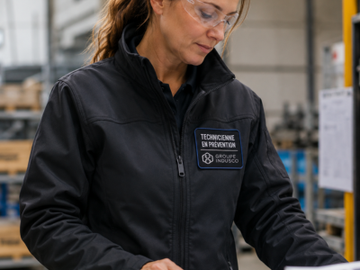
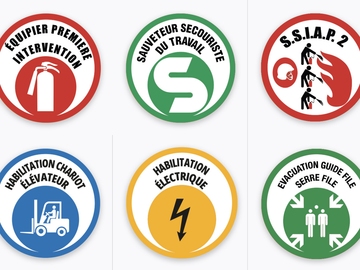
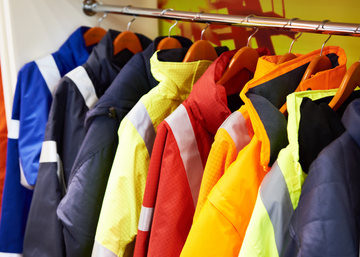
- workwear
- premium brands
- caps
- corporate clothing
They allow you to create a more upscale finish than a simple t-shirt transfer, particularly thanks to embossing, material and texture effects.
In summary…
Process
The patch is an element manufactured separately and then heat-sealed, velcroed or sewn onto the garment. It is not a direct print but a genuine textile element added. It thus constitutes a premium alternative to the classic heat transfer for textiles.
Advantages
Embossed and upscale effect
Very high durability
Brand enhancement
Wide choice of materials and finishes
Example of professional application
Workwear, premium brands, corporate clothing or personalized caps use the patch to bring strong perceived value and a quality image to the product.
Which technique to choose?
There is no single perfect technique, only techniques suited to the purpose.
DTF simplifies production and adapts to almost anything.
Sublimation guarantees extreme durability on technical textiles.
Screen printing remains unbeatable for high-volume production.
Patches add superior perceived value.
Sherpa's role is not simply to print, but to offer you the right textile transfer solution based on the final use of the garment.
👉 To help you quickly determine the best technique for your project, use our printing method selection tool or contact our team!


