









































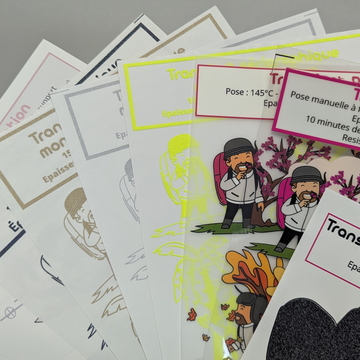


When starting out or looking to optimize production, a question comes up very often in the workshop: should you use a hot peel or cold peel DTF film?
At first glance, the difference seems minimal. Yet it directly influences production speed, work comfort, and even error rate during marking.
Here's how to choose wisely based on your activity.
Understanding the principle of hair removal for DTF transfer
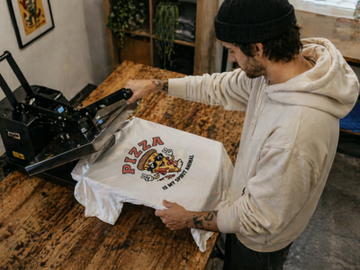
In a DTF textile transfer, the design is printed on a film and then pressed onto the garment. Once pressing is complete, there is one essential step: removing the carrier film.
This precise moment is what differentiates the two types of films:
- Hot peel → immediate hot removal
- Cold peel → removal after cooling
The final result remains similar.
The difference mainly concerns ergonomics and production speed.
The DTF hot peel film: productivity above all
With a hot peel film, the operator removes the backing immediately after opening the press. The textile can be handled almost instantly.
In a workshop, this greatly changes the pace: press → peel → continue.
This method reduces downtime and streamlines the production line. Today, it is the preferred choice for most professionals.
When to use it?
- daily production
- regular customer orders
- medium or large runs
- organized workshops
Hot peel transforms a marking station into a true production station.
The DTF cold peel film: application safety
With a cold peel film, you must wait for the transfer to cool before removing the backing.
This wait may seem restrictive, but it offers an advantage: the transfer has time to stabilize, which limits handling errors.
It is therefore more forgiving during learning or for occasional operators.
When to use it?
- business startup
- occasional production
- operator training
- very fine designs
Cold peel reassures and secures application, at the cost of a slower pace.
Is the finish different?
Today, modern films offer very similar rendering.
The quality of a DTF t-shirt transfer depends mainly on:
- pressure
- temperature
- fabric
The type of peel mainly influences the working method, not the visual quality.
After thousands of orders produced and tested, we consistently observe the same thing:
👉 Your choice should depend on your organization, not solely on your preference.
- If you produce regularly: hot peel quickly becomes essential to maintain a profitable pace.
- If you're starting out: cold peel significantly reduces initial errors.
- If you have multiple operators: standardize a single type to avoid bad habits.
- If your transfers are peeling off: the problem almost always comes from pressure or fabric, not the peel.
Finally, in a professional workshop, the switch to hot peel almost always happens naturally with experience.
Hot peel and cold peel are not two different qualities, but two different work logics.
Cold peel prioritizes safety.
Hot peel prioritizes productivity.
The important thing is therefore to adapt your DTF film to your production method.


